UNNS Substrate Research Program · Yang–Mills · 2026
If the Vacuum Has No Wall, Where Does the Gap Live?
What two UNNS Yang–Mills projects revealed about structural accessibility, spectral discreteness, and the missing bridge between them
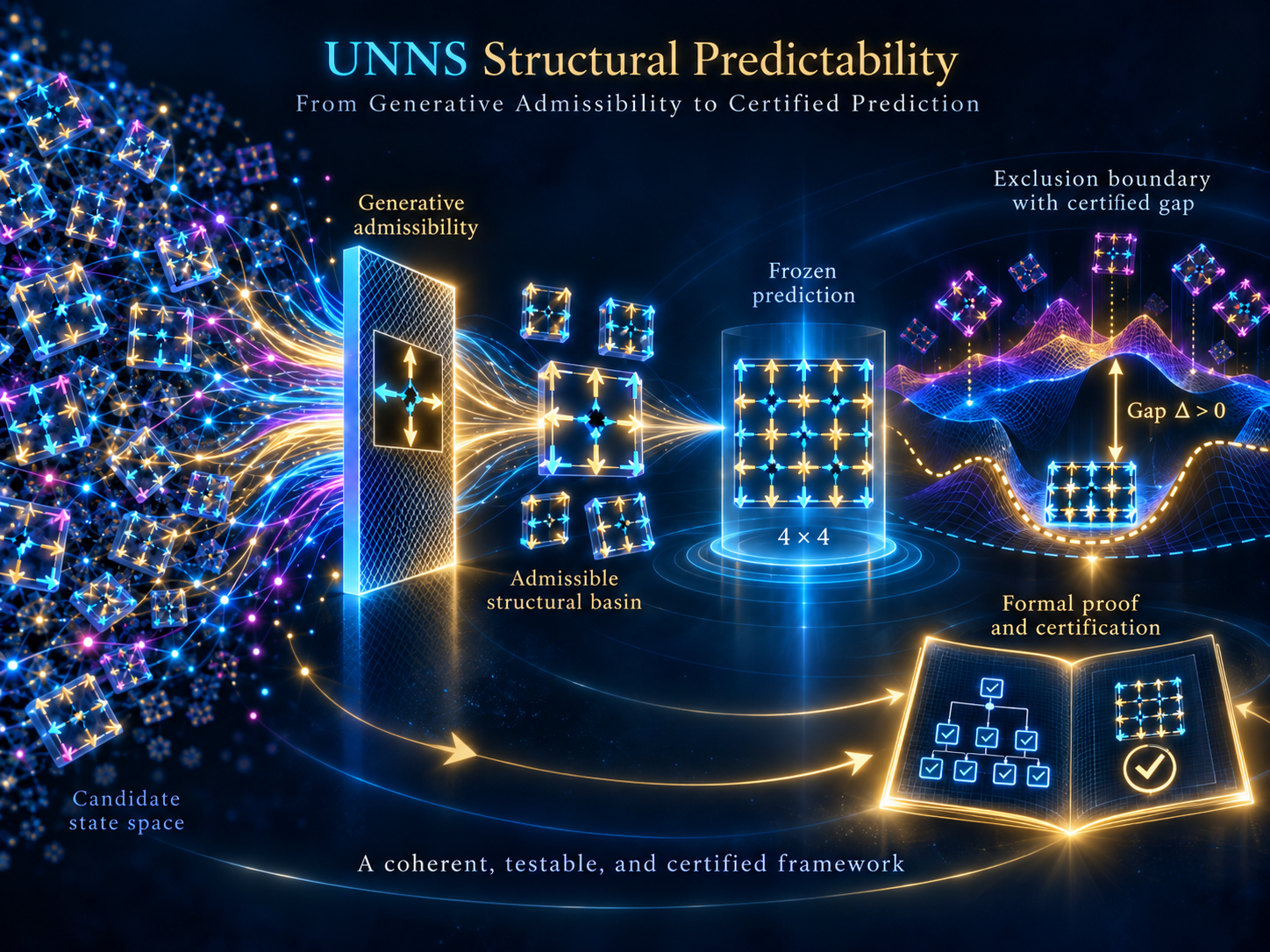
We began with a strong hypothesis: perhaps the Yang–Mills mass gap reflects a structural boundary that cannot be crossed as one approaches the vacuum. The data did not establish that wall. What emerged instead was more interesting: structural accessibility and a positive spectral scale can coexist.
Wall: not establishedAccessibility: supportedM/√σ = 3.405(21)Coexistence supportedOpen: Π

Read more: Close to the Vacuum, Far in Energy